Welcome to Homeross House
Welcome to the Homeross House community website. Run by the residents association, we aim to provide a whole range of interesting and useful information for everyone living at Homeross House.
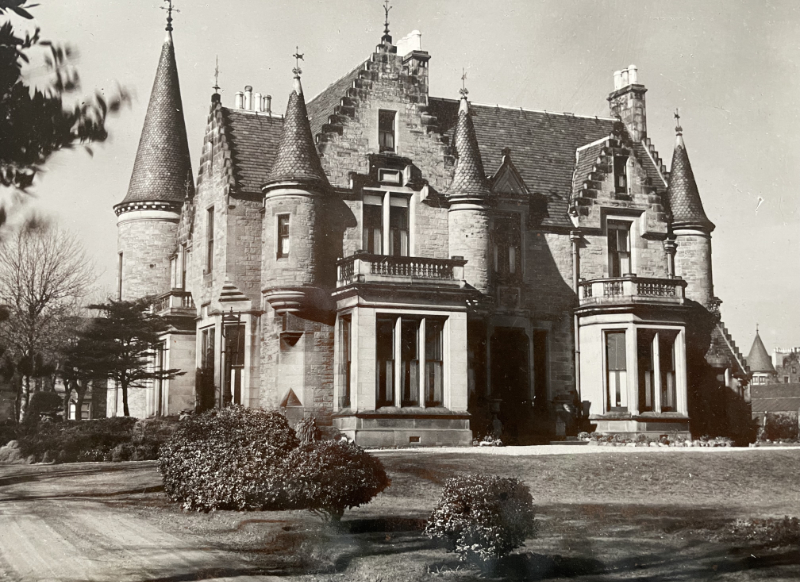 The history of the site of Homeross House begins around 1864, when maps from the following year show the first building on the site - Mount Grange House. The address was on Hope Terrace; number 29 and extended through to Strathearn Road. It was described as a grand "Scottish Baronial" mansion.
It comprised: outer and inner halls, dining, drawing and billiard rooms, library, parlour, conservatory off the drawing room, 9 bed and dressing rooms, 2 bathrooms, boxroom, buttlers pantry, kitchen, scullery, washhouse, laundry, servant's hall and rooms and wine cellar.
There was also a two stalled stable, harness room and coachhouse. The garden grounds extended to 1 acre, 1 rood (quarter of an acre) and 21½ poles (16.5 feet).
The first record of its residents, was in the 1866 Post Office directory, when John James Muirhead occupied the house. John Muirhead, born in 1828 in Glasgow, he married Isebella Fullerton in Saint Cuthberts church, Edinburgh in 1852 and had 6 sons and 8 daughters.
John Muirhead represented the St Giles Ward in the town council, being elected in 1866.
He worked for Mackay Cunningham & Co., originally a partnership of James Mackay and David Cunningham, a prominent Edinburgh goldsmiths and watchmakers. The partnership of James Mackay and David Cunningham was established sometime before 1824, initially at 40 South Bridge, Edinburgh. By 1856, the firm was known as Mackay Cunningham & Co and held the title "Goldsmiths to the Queen". They later moved to 54 Princes Street. James Hamilton, who had worked as Principal Assistant for Mackay Cunningham & Co for 20 years, later founded Hamilton & Inches with his nephew, Robert Kirk Inches, in 1866. Mackay Cunningham & Co was taken over by James Hardy & Co. Ltd. by 1912.
By 1870, John Muirhead had moved to Mayfield Terrace. In 1899 he died in London.
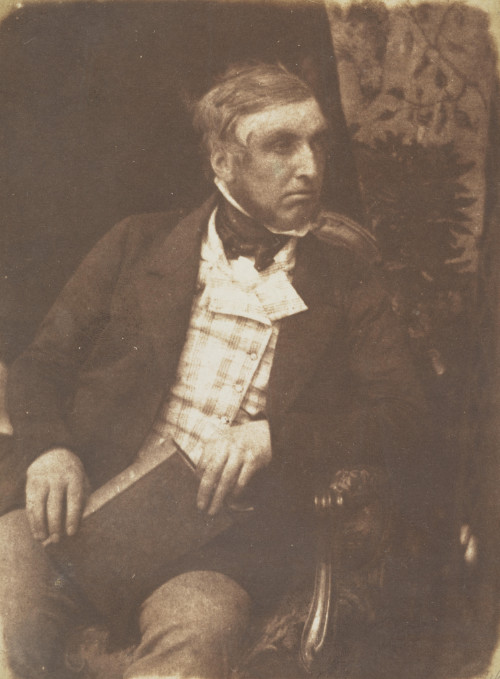 The second resident of Mount Grange House was Charles Cowan, of Logan House, noted in the 1870-71 Post Office directory.
Charles was the eldest son of eleven children, of the respected Cowan family from Penicuik, who owned the huge Valleyfield paper works on the edge of the town. Born in 1801 at Charlotte Street, Edinburgh, he attended school in Penicuik, then university in Edinburgh and Geneva. In 1819 he began studying the paper-making trade in Kent, returning to work for the family paper-making business.
Charles married Catherine Menzies in October 1824 in Penicuik and had 13 children.
In December 1847, Charles was elected as an MP, running as a Conservative (also reported as radical free) candidate. He was re-elected in the 1852 and 1857 elections but did not stand in 1859 and retired from politics to concentrate on the family business.
Around the time Mount Grange House was being built, Charles served as president of the Royal Scottish Society of Arts.
Charles died in March 1889 at Wester Lea, a villa in Murrayfield, Edinburgh.
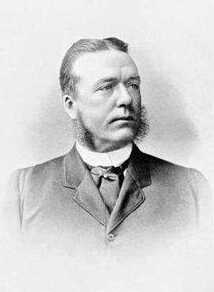 The third resident, first noted on the 1871-72 Post Office directory, was Thomas Craige Glover, a highly respected and influencial engineer and railway & public works contractor. Thomas Glover, born in 1836 was educated at Leith High School the son of a Sheriff clerk. He served his apprenticeship with Dunbar Kirkwood in Edinburgh then travelled to America and Canada, before moving to India in 1863, settling in Bombay. Working principally in India, building major infrastructure during the 1880's and 1890's. Under his direction some very important contracts, including the Bombay docks, some extensive railways, and large water works, were executed.
He owned a magnificent yacht, with which he frequently visited Scotland during his residence in India, and with which travelled extensively after his retirement from business.
Thomas married Ellen Dunoon Gordon in March 1858. Originally from New York, US, Ellen died in March 1895 in Edinburgh.
They were the parents of at least 2 sons and 8 daughters.
On his retiral, he took up his residence Edinburgh, subsequently acquiring Earlsferry House, where he spent a good deal of his leisure. He continued to be chairman of the Bengal Iron and Steel Company, and he was also a sleeping partner Messrs S. and H. Morton and Co., shipbuilders, Leith.'
Thomas Craige Glover died in 1904 at his residence, Earlsferry House, Elie, Fife.
Following Thomas Glover's death, it appears Mount Grange House was occupied by his sons and daughters, until November 1913 when the the entire contents of the house were put up for sale.
 In January 1917 the house was offered for rent for the sum of £230 with Feu duties of £27, 13s, 9d.
Two years later, in December 1919 the house was listed for sale by auction, scheduled for January 1920 by the trustees of T. C. Glover.
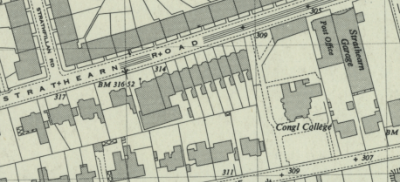
In 1920, Mount Grange House was bought for £3150 by the Congregational Union of Scotland where they established the theological Scottish Congregational College.
An additional £1000 was to be spent for alterations and repairs to prepare the house for their use as a college.
Eric Liddell, the inspiring Olympic gold medalist, studied and lived at the college in 1924-25. Refusing to run on Sundays, he wouldn't take part in his favourite 100m race in the 1924 Paris Olympics. Instead winning the gold medal at the 400m distance and a bronze in the 200m.
Eric returned to continue his studies at Mount Grange college in 1930-32, being ordained as a minister in June 1932.
Born in Tientsin (now Tianjin), China, in 1902 to missionary parents, Liddell first came to Scotland in 1907, although most of his schooling was at Eltham College, Kent.
In 1920, Eric started his studies for a BSc at Edinburgh University, graduating in 1924. He ran 100 and 200 yards for the University and Scotland, playing rugby for the University and in seven internationals. He kept up his Christian beliefs at Morningside Congregational Church and speaking as part of Muscular Christianity Campaigns.
From 1925 to 1943, Eric Liddell devoted his life to missionary work in North China. He taught science and athletics to boys at the Anglo-Chinese College in Tientsin for 12 years before moving to Siaochang in 1937. In 1941, the escalating war with Japan made life even more fraught. Wife Florence, daughter of Canadian missionaries, whom he had married in 1934, and their two young daughters moved to Canada where Eric’s third daughter was born. Eric stayed in Tientsin until 1943 when he was interned by the Japanese in Weihsein Camp. He remained a staunch Christian to the end, urging his fellow internees to show forgiveness to the Japanese. In February 1945, Eric Liddell died of a brain tumour in the camp.
The house was sold in 1975 to become the Mountgrange Hotel.
A planning application was lodged in December of that year by - Mr & Mrs. D. Aitchison, for a change of use from college to hotel. It appears this initial application was refused but on appeal it was eventually granted in February 1978.
The last episode of Mount Grange House came in 1983 when McCarthy Stone Developments acquired the property and submitted a planning application in September for the erection of 125 flats for the elderly.
By that time Mount Grange House had been demolished.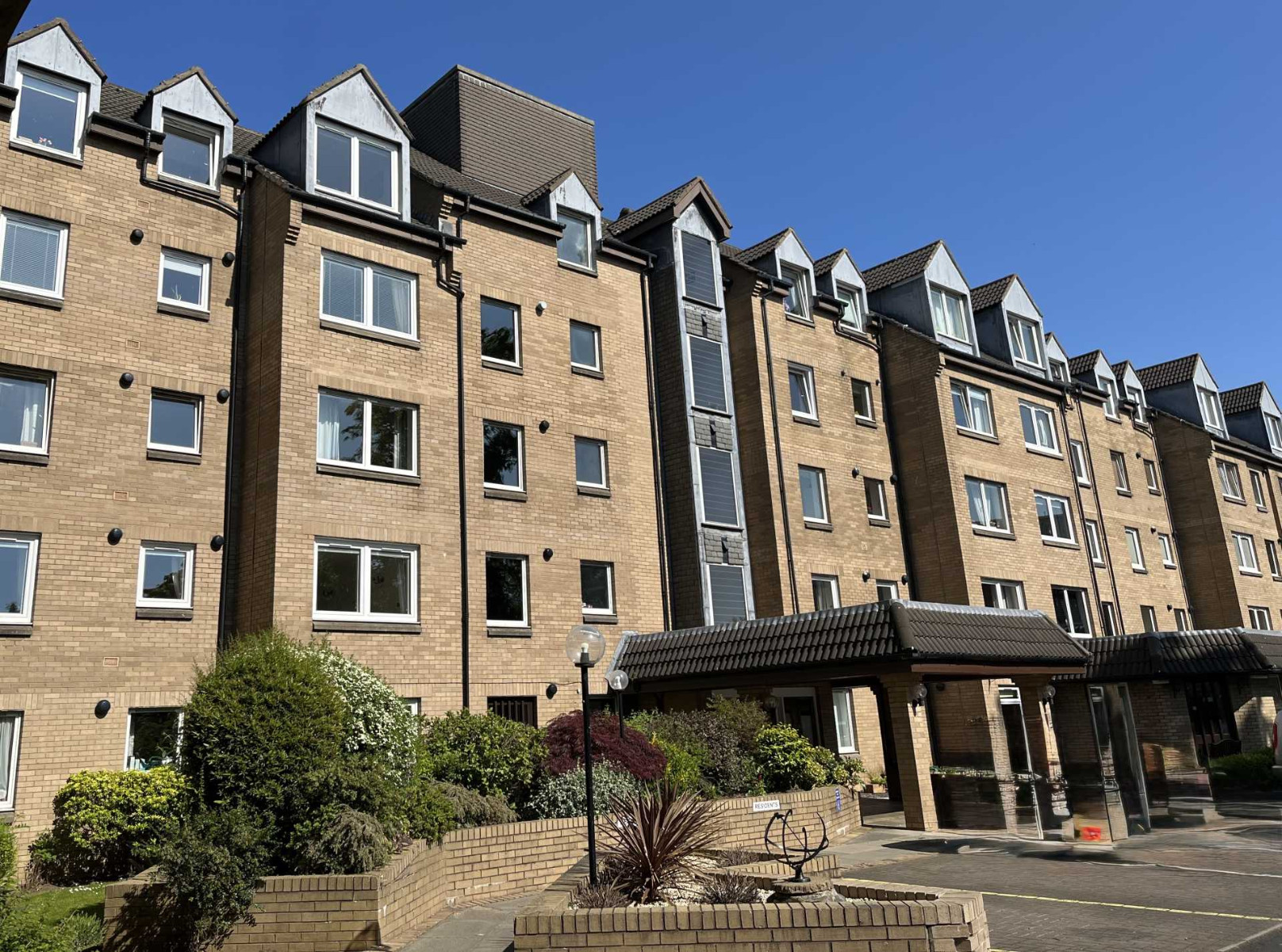
The planning application was initially turned down over grounds of overdevelopment of the site and the proposed building being too high. Clearly the appeal was successful and the building was opened in 1985.
If you have any other stories or information that would add to the history of Homeross House and the Mount Grange site, we would love to hear about it.
Please contact us and we can see about adding it here.
Many thanks to Andrew Paterson for his help in researching this history and to The Scottish College (Congregational and United Reformed) for their photograph of Mount Grange House.
In order to access information you will need to register by creating a resident user account and login, which is easy to do using the Login link in the menu above.
The Noticeboard section will mirror the contents of the physical noticeboard located outside the managers office, with the News & Events sections providing additional relevant information with a calendar of events.
From time to time we will post questions we would like to get your views and opinions on. This will be done through the Have You Say section. You can also post your own questions and seek comments and feedback. All posts will be checked by the site administration to ensure they comply with our guidelines.
Our Library section contains a categorised list of help documents on a variety of topics relating to living at Homeross House.
We are always looking for ideas or suggestions and ways to improve the website, so please get in touch using the Contact form below.
Noticeboard, News, & Events
Please login below to access the Homeross House Website, and enjoy access to our community features.
Contact Us
If you need a resident user account to access the private areas of the website, please send us a message using the form below, including your flat number.
Please feel free to get in touch with any ideas, comments or questions. We'd love to hear from you. Click on the Contact Form button below.